Discover your 100% Free Loyalty Programme | Discover
TrustMark
4.71/5
unchecked wish list
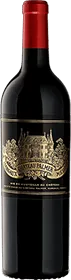
Château Palmer 2004
4 pictures
4 pictures

Château Palmer 2004

3e cru classe - - - Red - See details
Parker | 94
J. Robinson | 16.5
Wine Spectator | 91
R. Gabriel | 19
Vinous Neal Martin | 87
$606.00 Incl. GST & DP
(
$606.00 / Unit
)
Packaging : Bottle (75cl)
1 x 75CL
$606.00

Only 1 available

Pre-arrivals - Stock in France

  • Delivery
    DeliveryFree standard delivery from $1,000 purchase
    Right arrow icon
  • Guaranteed provenance
    Guaranteed provenanceWines sourced directly from the producing estates
    Right arrow icon
Marks and reviews

94

/100

Robert Parker

Robert M. Parker, Jr.

This stunning wine is one of the vintage’s great successes. Administrator Thomas Duroux has fashioned a modern-day version of Palmer’s brilliant 1966. Displaying a rare combination of power and elegance, this dense purple-colored offering exhibits notes of blackberries, truffles, flowers, incense, and camphor. Long, classic, and medium to full-bodied with stunning texture and richness, this superb effort is a candidate for the finest Margaux of the vintage. Anticipated maturity: 2011-2025+. Also tasted: 2004 Alter Ego de Palmer (88)

91

/100

Wine Spectator

Aromas of licorice, tar and mineral follow through to a full-bodied palate, with silky tannins and a medium finish. A very pretty wine already. Falls a little short, but still outstanding. Best after 2009. 6,000 cases made.

92

/100

Decanter

I appreciated this supple, elegant wine with its approachable blackberry and blackcurrant fruit aromas touched with hints of fresh flowers, saddle leather, and spice. The texture seemed slightly restrained, with silky tannins and balanced acidity, but the finesse stood out. It was perhaps too understated to make a powerful impression on some of the tasters, but I felt it showed well and would continue to age with grace.

18

/20

Jancis Robinson

Julia Harding MW

47% Merlot, 46% Cabernet Sauvignon, 7% Petit Verdot. Fine weather from spring to harvest. No excesses. Had to control yields that were high after the 2003 heat stress. Lots of secondary buds. Similar blend to 1999 but a very different wine – shows that it is not the varietal composition that determines the character of the wine. Deep crimson brightness. Sweetly oaky – intense and immediately recognisable bread-dough aroma. Underneath that there’s fine, pure, upright cassis but also sweet spice and plum and tobacco. Already surprisingly complex. Intense but fleeting floral perfume as that breadiness disappears. On the palate, masses of liquorice and sweet, bright, expressive fruit. Red and black fruit. Dramatic fruit even though the spice of the oak is still very clear. Toasty sweet spice and coffee. Rich and opulent fruit. Tannins are finely textured and a little firm but velvety. Long way to go though already generous. Delicious. Great finesse and fine-boned though it does show the oak a little more than the 2006. (JH)

87

/100

Vinous

Neal Martin

The 2004 Palmer is not one of my favorite vintages of that decade, though this is one of the best bottles. It lacks intensity and harmony on the nose, with prominent tobacco/cigar smoke scents and just a hint of boot polish. The palate is medium-bodied and spicy on the entry, with a touch of licorice that tapers toward the off-dry finish. I would broach bottles in the next three to four years. Tasted at the Lia's Wings/book dinner at Medlar restaurant.

95

/100

Jeff Leve

Leve Jeff

30 minutes in the decanter is all it takes for the wine to unfurl, and show off its display of dried flowers, cherry pipe tobacco, spice, and wet earth perfume. The palate is even better with its soft, elegant, fresh red plum and cherry profile. If the finish were just a bit longer, it would score even higher. Drink from 2023–2038.

93

/100

Falstaff

Falstaff

Strong ruby with purple reflections and broader rim brightness. Delicate floral notes, developed cherry fruit and a background of fine violet nuances, delicate liquorice, subtle herbal savouriness and tobacco nuances. Juicy, medium complexity, fine texture, pleasant sweetness, elegant, lingering; a very fine, delicate wine already offering great drinking pleasure. (Drinking/storing +15).

19

/20

Weinwisser

Medium ruby, dark at the core, lightening at the rim. Sweet, heady, multi-layered bouquet, red cherries, freshly baked black bread, terroir-indicating minerality. On the palate, velvety and elegant, tannins gliding over the tongue like silk, finesse and elegance shaping the wine, offering early and long-lasting pleasure, Burgundian, a classy wine.

19

/20

René Gabriel

Barrel sample: 47% Merlot, 46% Cabernet Sauvignon, 7% Petit Verdot: delicate, sweet bouquet showing many facets and, even as a barrel sample, lovely fragrance—ripe mulberries, light woods and white peppercorns. On the palate, fine-boned—almost the opposite of Château Margaux 2004—very feminine in texture, dancing, with a red-to-blue berry fruit profile; the finish shows a slight tannic astringency, the press wine’s pedigree lending almost a gingerbread-like aroma to the intense finale. Currently the best Margaux and comparable to its own 1985. 07: Medium ruby, dark at the core, brightening at the rim. Sweet, intoxicating, multi-layered bouquet: red cherries, freshly baked black bread, terroir-signalling minerality. On the palate, velvety, elegant, the tannins glide like silk across the tongue; finesse and elegance define this wine, which will give early and long-lasting pleasure. A Burgundian-class wine! 11: Ueli Eggenberger had the wine decanted and served it blind. My initial expectations were low. I wouldn’t have taken it for a great Bordeaux. Acidic, upfront, emphatic. I didn’t feel like drinking it right away either. So we waited a bit and drank other wines in the meantime. After an hour it was a great Bordeaux, but still a too-young Bordeaux—one that simply doesn’t want to open (yet). So wait a few more years. (19/20). 14: Dense and fleshy. Lots of character. That doesn’t really speak for a Palmer-like type—but it does for the vintage. (19/20). 16: Still dark, saturated garnet, with a lingering purple sheen inside. The bouquet is profound and shows noble restraint; everything lies almost in the black-berry spectrum, with plenty of cassis and blackberries. On the second pass, lactic nuances lend fullness and drive. What delights me is the noble character emanating from this incredibly deep nose. On the palate, velvety, soft, with a caressing texture. The finish is incredibly long, fading almost entirely on black-berry notes. This will be a truly great Palmer! And perhaps we won’t have to wait extremely long, since the fundamentals already show fairly intense aromatics. (19/20). 19: The first vintage under the new director Thomas Duroux. Quite solid and fairly dark purple. Still some violet highlights in the center. The bouquet already feels fairly approachable and gives the impression of a classic, terroir-driven Bordeaux. First notes of Brazil tobacco, inky traces, still blue berries. On the second pass, floral hints, first summer truffles and a discreet sweetness. On the palate, firm body, balanced astringency. Mid-palate shows a (still) slightly peppery acidity; the tannins call for more bottle age, but first enjoyment is in sight. Two hours of decanting make for a truly great Bordeaux experience. At the beginning of a very long drinking window. A buy recommendation for lovers of classicism. (19/20). 19: Dense purple with blood-colored highlights, minimal maturity tones on the rim. The bouquet is very deep from the outset, showing more blue and black berries than any other southern Médoc—a cocktail of cassis, blackberries and mulberries. On the second pass, black bread crust, comforting and majestically expansive. On the palate, it remains almost entirely black-berried, with velvety extract, balanced, seemingly ripe astringency, focused finish and very intense, persistent retronasal aromatics. It cannot completely hide the slightly cool vintage, but presents itself as a patient, even longer-lived classic. This time it’s more like a truly great Margaux, like a focused Palmer. It gained steadily with air, so longer decanting won’t hurt. (19/20). 21: Dark garnet with minimal signs of maturity radiating from within. Cool-exuding, Cabernet-driven, still too young and thus still reserved bouquet. It shows, however, that a) it reaches properly deep and b) tends toward great classicism. On the palate, still fresh, fleshy, with plenty of blue to black fruit. Additionally, it conveys endless licorice and black pepper powder. A fountain of youth with lots of further potential. Still far from peak. A serious buy for the day after tomorrow. From 2027? (19/20). wait

19

/20

André Kunz

Powerful, velvety, dark, fruity bouquet with plums, black cherries, licorice, flint. Velvety, dense, elegant palate with creamy fruit, fine tannins, complex dark aromatics, long, dense finish. 19/20 drink - 2035

95

/100

Jane Anson

Jane Anson

A more classic year than 2003 or 2005 on either side, really showing beautifully right now, still young but full of promise, tension and juice. This is an extremely elegant, balanced Palmer, with dark berry fruits, cassis and blackberry, a touch of campfire smoke, salinity and plenty of juice running through the muscular tannins. It plays with you on the finish, stretching out its flavours, mouthwatering, totally gorgeous, surprisingly so for a vintage that can get overlooked. One that you could happily open now, or hold for another decade or more. Harvest from September 27 to October 12, 60% new oak. Thomas Duroux’s first vintage as director.

17

/20

Bettane+Desseauve

In a class of its own on the nose, with a refined texture and great length thanks to exemplary tannin quality; a wine of great style in a vintage less sought-after than others.

94

/100

Jean-Marc Quarin

Jean-Marc Quarin

Logo on the cork: A in a circle (Amorim) Dark, intense, beautiful color with slight evolution. Fruity nose, ripe and fresh. Decant it. Fleshy, smooth, flavorful palate, a bit more substantial than the 2008, but also somewhat oaky and toasty, which counts against it. Good length.

93

/100

Wine Enthusiast

Roger Voss

This wine hits the opulent end of the spectrum, with its dense, velvet structure, and superrich fruit. But it is not weighed down with this richness, because the pure fruit, the fine lines of the tannins and the very precise character of the vanilla from the wood all give liveliness.

Description

The elegance and richness of a great Margaux wine

The estate

The Château Palmer is a true star of the Margaux appellation, on the left bank of the Bordeaux region. With beginnings in biodynamics started in 2009, Château Palmer chose to convert the entire vineyard as of 2014. After building its legend on vintages that have become mythical, Château Palmer continues to write its history under the direction of the talented Thomas Duroux.

The vineyard

Benefiting from an exceptional Margaux terroir located in the immediate vicinity of the Gironde estuary, Château Palmer has an unusual grape variety in Médoc, giving pride of place to merlot (47%), which is alongside cabernet sauvignon in equal proportions (47%) associated with petit verdot (6%).

The vintage

Unlike the previous two years, 2004 benefited from an ideal climate, without excess, allowing a slow and homogeneous maturation of the grapes. The vinification, with an average duration of 21 days, varied according to the tanks to maximize either the expression of the fruit or the power of the wine. This vintage stands out for its balance between finesse and depth, perfectly reflecting the generosity of the Palmer terroir.

Blend

This Château Palmer 2004 is a blend of merlot (47%), cabernet sauvignon (46%) and petit verdot (7%).

Château Palmer 2004
2.0.0