Taittinger, the great Reims house of Chardonnay: style, vineyards, chalk cellars
The white grape as a guiding thread
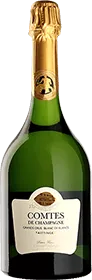
Based on Place Saint-Nicaise in Reims, Maison Taittinger stands apart among the great houses of Champagne for the role it gives to Chardonnay. The choice goes back to François Taittinger, who made it the signature grape and in 1952 created Comtes de Champagne, a Blanc de Blancs. His nephew Pierre-Emmanuel sums it up in a single sentence: “ The Taittinger style, airy, fine and delicate, we owe to Chardonnay. ” The house's non-vintage Brut contains 40% of it, whereas many major houses favour the Pinots in theirs.
A 288-hectare vineyard, planted mainly with Pinot Noir
The paradox is surprising. According to the house, its 288 hectares, the third-largest vineyard in Champagne, are planted 48% with Pinot Noir, 37% with Chardonnay and 15% with Meunier, across some forty crus. The Chardonnay signature therefore stems from blending choices rather than from the composition of the vines. This vineyard provides a significant share of the house's supply, an asset that Taittinger links to the consistency of its cuvées; it is certified Haute Valeur Environnementale (level 3) and Viticulture Durable en Champagne.
The chalk cellars of Saint-Nicaise
Beneath the house's headquarters, the cellars descend 18 metres into former chalk quarries dug in Gallo-Roman times, which later became the foundations of the Saint-Nicaise abbey. They belong to the “Champagne Hillsides, Houses and Cellars” inscribed on the UNESCO World Heritage List in 2015. Comtes de Champagne spends its long years of cellar ageing there.
Brut, rosé, Sec or vintage: choosing from the Taittinger range
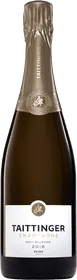
Brut Réserve and Cuvée Prestige, the two non-vintage Bruts
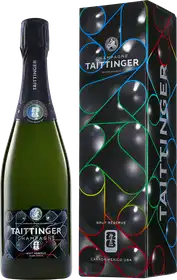
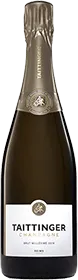
The Brut Réserve, the house's non-vintage Brut, is a blend of 40% Chardonnay and 60% Pinot Noir and Pinot Meunier from more than 35 different crus, drawn from several harvests, each picked at perfect ripeness. It rests three to four years in the cellar, more than double the fifteen months required for a non-vintage Brut, and receives a dosage of 9 g/l. The house intends it to be “for every moment”, and it is the most versatile bottle in the range. The Cuvée Prestige is another non-vintage Brut with 40% Chardonnay, with a blend identical to that of the Brut Réserve.
Prélude Grands Crus and Folies de la Marquetterie, cuvées designed for the table
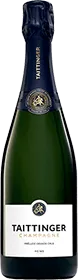
The Prélude Grands Crus, also non-vintage, sits a notch above: equal parts Chardonnay and Pinot Noir, sourced exclusively from villages classified Grand Cru, then aged five years in the cellar. The Folies de la Marquetterie, the brand's first “estate” Champagne, tips the balance towards Pinot Noir, at 55%. A dozen of the house's plots, in Pierry, Hautvillers, Trépail and Verzenay, are vinified separately, and 30% of the cuvée goes into foudre, a large wooden vat. Vitalie Taittinger sees in it “the most vinous of the range”.
Prestige Rosé, a blended rosé
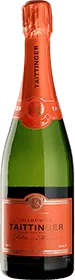
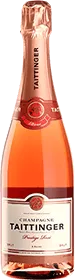
Taittinger's rosés are born of blending: a still red wine is added to the white wine before the secondary fermentation. In the Prestige Rosé, this red wine represents 11 to 14% of the blend and comes from the Montagne de Reims, the Vallée de la Marne and Les Riceys, in the Côte des Bar. The base blend combines Chardonnay (30%) and Pinot Noir (70%) from the Montagne de Reims and Les Riceys. It is completed by 15% of juices vinified as red.
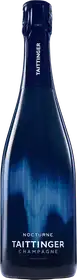
Nocturne and Nocturne Rosé, the choice of a Sec dosage
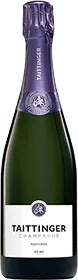
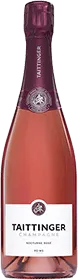
Nocturne and Nocturne Rosé carry the “Sec” designation and receive 17.5 g/l of cane sugar, roughly double that of the Brut Réserve. The white blends 40% Chardonnay and 60% Pinot Noir/Meunier, and ages for about four years in the cellar; the rosé combines 30% Chardonnay and 70% Pinot Noir/Meunier, completed by 15% still red wine. The house intends them for desserts and the end of an evening.
The Brut Millésimé, a snapshot of a harvest
The Brut Millésimé opens the house's vintage series. It blends equal parts Chardonnay and Pinot Noir from the first pressing, with 70% Grand Cru and, for the remainder, exclusively Premier Cru. It spends five years in the cellar and receives, like the Brut Réserve, a dosage of 9 g/l.
Comtes de Champagne: the origin of the name, the Grand Cru Blanc de Blancs and the rosé
A name taken from a residence in Reims
At the top of the range, the cuvée pays tribute to the counts of Champagne and takes its name from their former residence in Reims, which dates back to the 13th century and where the company had its headquarters before moving to Saint-Nicaise. Pierre-Emmanuel Taittinger defined its rank: “If our non-vintage Brut is our honour, Comtes de Champagne is our signature.”
The Blanc de Blancs from five villages
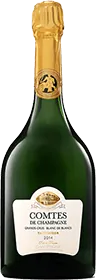
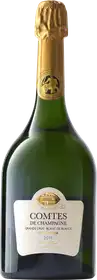
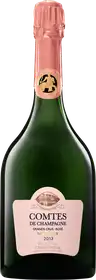
The Comtes de Champagne Blanc de Blancs is a vintage Champagne made solely from Chardonnays of Avize, Chouilly, Cramant, Le Mesnil-sur-Oger and Oger, five of the six villages classified Grand Cru in the Côte des Blancs. Only the first-press juice, the “cuvée”, goes into this Blanc de Blancs. A small share of the wines, 5 to 8% depending on the vintage, spends four to six months in oak barrels, a third of which are renewed each year, which enhances its toasty notes. Ten years of ageing in the chalk cellars then follow.
The rosé, when both grapes succeed
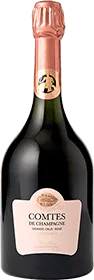
The Comtes de Champagne Rosé blends Grand Cru Chardonnays from the Côte des Blancs with Grand Cru Pinot Noirs from the Montagne de Reims, including 12 to 15% Bouzy Pinot Noir vinified as red. Pinot Noir dominates, at 60 or 70% depending on the vintage. It ages for twelve years at Saint-Nicaise. The house produces it only when the year is successful for both Chardonnay and Pinot Noir, and has long presented it as its rarest cuvée.
Ageing potential of non-vintage and vintage cuvées: when to open a Taittinger
Non-vintage cuvées, five years of cellaring or more
The timeline follows the range. For the Brut Réserve, the Prestige Rosé, the Prélude Grands Crus, the Folies de la Marquetterie and Nocturne Rosé, the house indicates an ageing potential of at least five years; it recommends opening Nocturne earlier, within three to four years.
Vintage cuvées, and the appeal of a vertical tasting
For its vintage Champagnes, the house indicates eight years of ageing or more for the Brut Millésimé, ten years or more for the Comtes de Champagne Blanc de Blancs and twelve years or more for the Comtes de Champagne Rosé 2013. When several vintages of this Blanc de Blancs sit side by side in the selection, opening them together isolates the effect of the year: the five villages do not change, the harvest does.