Assistant



 Guaranteed provenanceDirect from the estates
 DeliveryFree standard delivery from $1,000 purchase
 Secure PaymentVisa, American Express, Mastercard...

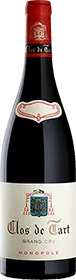
Clos de Tart : Clos de Tart Grand cru Monopole 2021
Pre-arrivals - Stock in France
Let's talk about this product!
A pairing in mind? A question about the vintage? Comparison with another product? Find the answers here...
Description
Tasting characteristics and advice for Clos de Tart Grand Cru Monopole 2021
Tasting
Color
The color reveals a deep ruby-red hue with bright highlights, reflecting fine intensity.
Nose
The bouquet is complex and aromatic, unfurling aromas of wild raspberry, black cherry, and redcurrant. Floral notes of dried rose mingle with hints of damp undergrowth, crushed stone, and exotic spices. With aeration, the nose evolves toward nuances of wild red berries and a chalky minerality.
Palate
On the palate, the wine is generous and fleshy, with a delicate attack that opens onto an enveloping mid-palate. The tannic structure stands out for its fine, silky grain, providing poise with no roughness whatsoever. Lively, elegant acidity brings freshness and definition to the whole. Flavors of black plum, cranberry, and pomegranate are lifted by touches of cocoa, clove, and crushed stone. The finish lingers at length with graphite and herbal notes.
Food and wine pairings
This Clos de Tart Grand Cru Monopole 2021 pairs beautifully with roasted red meats, feathered game such as pheasant or grouse, as well as roast duck. It also goes well with braised dishes such as boeuf bourguignon, fine cured meats like prosciutto, or soft cheeses with a pronounced character.
Serving and cellaring
Clos de Tart Grand Cru Monopole 2021 is best enjoyed at a temperature of 14°C. Decanting is not necessary, but opening the bottle 20 to 30 minutes before serving allows the wine to reveal its full aromatic complexity. This vintage can be enjoyed through around 2040.
A Burgundian Grand Cru combining finesse and complexity
The estate
Clos de Tart is an iconic Burgundy estate located in Morey-Saint-Denis. Founded in 1141 by the Cistercian nuns of the Abbey of Tart, it was owned by the Mommessin family from 1932 to 2018. Since April 2018, the estate has belonged to Artémis Domaines, the holding company of François Pinault. Clos de Tart is the largest Grand Cru monopole in Burgundy, with 7.53 hectares entirely enclosed by walls. Under the direction of Alessandro Noli, the estate pursues a commitment to excellence in organic and biodynamic farming, certified in 2018 and 2019 respectively.
The vineyard
The Clos de Tart vineyard covers 7.53 hectares in the heart of the Morey-Saint-Denis appellation, on the Côte de Nuits. Entirely enclosed by a 1.2-kilometer stone wall, it benefits from an east and southeast exposure at an altitude between 250 and 300 meters. The terroir is defined by remarkable geological complexity with three distinct soil types: entrochal limestone on the upper slopes, white marls mid-slope, and Prémeaux limestone on the lower slopes. The vines, averaging 60 years of age, are planted in an unusual north-south orientation at very high density (11,000 vines per hectare). The estate has identified twelve distinct plots corresponding to different expressions of the terroir. Vineyard management favors deliberately limited yields of 23–30 hectoliters per hectare, well below the authorized 40 hectoliters.
The vintage
The 2021 vintage in Burgundy proved demanding, marked by episodes of spring frost that affected many vineyards. Despite these challenging climatic conditions, Clos de Tart benefited from relative protection thanks to its specific orientation and distinctive microclimate. The vintage is characterized by wines expressing freshness, finesse, and elegance, with more moderate alcohol levels than in warm years. Production reached around 30 hectoliters per hectare, reflecting the constraints of the vintage while maintaining remarkable quality.
Vinification and aging
The Clos de Tart Grand Cru Monopole 2021 grapes were harvested by hand, with meticulous sorting plot by plot. Vinification incorporated 53% whole clusters, adding structure and aromatic complexity. Fermentations took place with indigenous yeasts in custom-made wooden vats, allowing separate vinification of the twelve identified plots. Aging was carried out for around 18 months in French oak barrels, with 64% new oak from the Tronçais and Allier forests. The first months of maturation took place on the ground floor of the vat room, before transfer to the 19th-century underground cellars for the second part of aging. The final blend of the different plots was carried out just before bottling, without filtration.
Grape variety
100% Pinot Noir