Krug, or one man’s vision
Krug holds a place apart in Champagne: founded in Reims in 1843 by Joseph Krug, the house does not rank its wines from the most common to the most confidential. Its founder wished to offer the best possible champagne every year, whatever the whims of the climate, and he set out this principle in 1848 in a personal notebook that became the house charter. A multi-vintage placed beneath a vintage? Not at Krug, where the Grande Cuvée is conceived as a prestige cuvée in its own right, not as an entry point.
One plot, one wine, casks that leave no mark
Each plot is harvested and vinified separately, so that its wine keeps its character until the day of blending. Fermentation takes place in small, old oak casks, chosen because they are neutral and allow lots sometimes no bigger than a garden to be handled individually. Malolactic fermentation (which softens acidity) is never induced, but it is not stopped if it begins on its own. The juices then wait on their lees, in small stainless steel tanks, until it is time to taste them.
Around 400 wines on the tasting table
In the months following the harvest, the tasting committee led by cellar master Julie Cavil reviews some 400 wines: 250 from the current year and 150 reserve wines drawn from around fifteen earlier harvests. Nearly 5,000 tasting notes precede the decision. This reserve is the true raw material of the house. Part of the grapes comes from the Cercle des Vignerons Krug, around a hundred growers bound to the house by commitments covering designated plots; the oldest contract still active dates back to 1876.
Years in the cellar, then a dosage that goes unnoticed
Cellar ageing is counted here in full years: seven at a minimum for the multi-vintage blend, and most often more than ten for the vintages and the clos. Henri Krug, of the fifth generation, summed up the dosage of the cuvées this way: the right dosage is the one whose absence would be missed but whose presence goes unnoticed. From this long ageing comes the depth of the blends, which the house sees continue to gain patina well after release.
Choosing a Krug champagne: Grande Cuvée, Rosé, Vintage, Collection or the two clos
Which bottle to start with
Since the house does not rank its cuvées, the price differences across the range mainly reflect the volumes produced and the length of cellar ageing. Krug Grande Cuvée, produced every year and in the largest volume, remains the most accessible and the safest choice for discovering the house or for gifting. Krug Rosé and Krug Vintage form the next tier. Krug Collection and the two clos, produced in small quantities and only in certain years, sit at the summit.
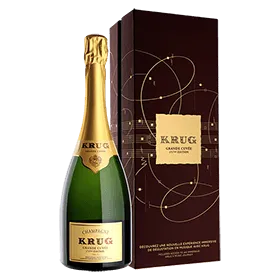
Grande Cuvée: a new recipe with every edition
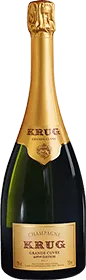
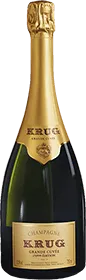
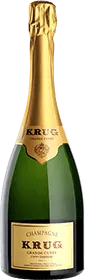
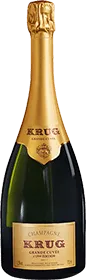
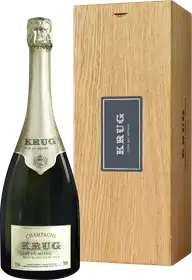
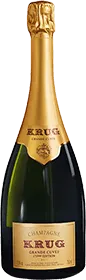
Krug Grande Cuvée is the house’s multi-vintage brut, recreated every year from at least 120 wines from more than ten different years, the oldest of which is always more than ten years old. The 174th Edition, built around the 2018 harvest, brings together 143 wines from ten different years, from 2001 to 2018, with 36% reserve wines, 54% Pinot Noir, 29% Chardonnay and 17% Meunier. From one edition to the next, the recipe changes; the intention remains.
How to read the edition number: it counts the successive recreations of the cuvée since the founding of the house and does not refer to a year. The base year, that is, the youngest harvest in the blend, is read separately: 2017 for the 173rd Edition, 2018 for the 174th. Krug Rosé has its own, much shorter numbering, which pairs, for example, the 28th Edition with the 2016 harvest.
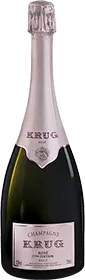
A rosé conceived for the table
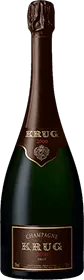
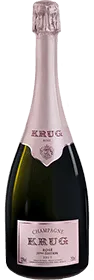
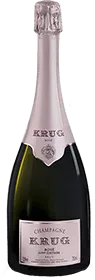
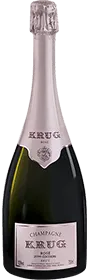
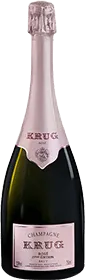
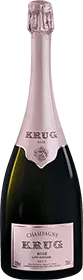
Krug Rosé is the house’s multi-vintage rosé blend, decided by Henri and Rémi Krug during the 1976 harvest and presented to the public in 1983. Its colour comes from 10 to 11% Pinot Noir vinified as a red wine by maceration, sourced from plots such as Aÿ, Mareuil-sur-Aÿ or Mutigny. Rémi Krug wanted the hue to follow from the choices made for the nose and palate, never the other way round. Among rosé champagnes, it stands out for a structure that makes it better suited to the table than to the aperitif.
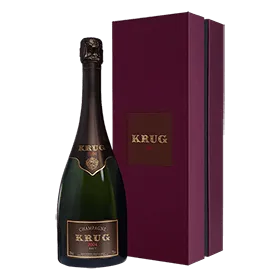
Vintage: the portrait of a single harvest
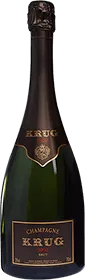
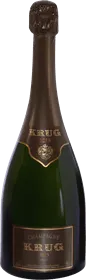
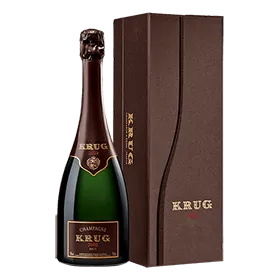
Krug Vintage blends the most expressive wines of a single year, then spends more than ten years in the cellar before its release. The house produces it only in certain years, when it judges that the season has a distinct character to convey. This vintage champagne should therefore not be seen as a superior version of the Grande Cuvée, but as a snapshot. It is the cuvée to choose for comparing years against one another.
Collection, or the second release of a vintage
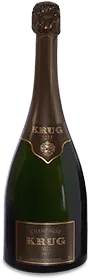
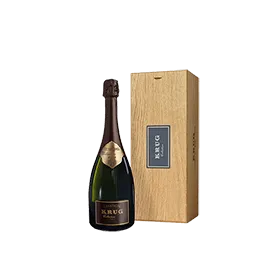
Krug Collection is not a distinct cuvée: it consists of bottles of the house’s vintage kept in Reims, then presented a second time when the cellar master notes the emergence of new aromas. Their time in the cellar most often exceeds twenty years.
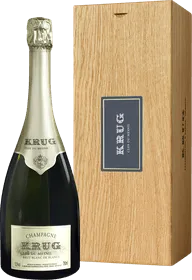
Clos du Mesnil, a Chardonnay within four walls
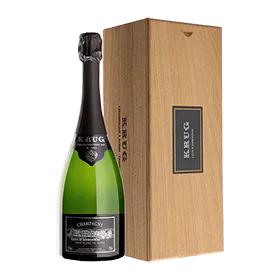
Krug Clos du Mesnil is a vintage blanc de blancs from a single 1.84-hectare plot, walled since 1698 in the centre of Le Mesnil-sur-Oger, in the Côte des Blancs. Purchased in 1971 to supply the Grande Cuvée, it yielded wines so pure that the family drew from it a first single-plot blanc de blancs with the 1979 harvest, presented in 1986.
Clos d’Ambonnay, the most confidential cuvée
Krug Clos d’Ambonnay applies the same idea to Pinot Noir: it is a vintage blanc de noirs drawn from a 0.68-hectare clos, protected by walls since 1766 on the south-eastern slope of the Montagne de Reims. Henri and Rémi Krug found it in 1991 after seven years of searching and acquired it in 1994. The first vintage, 1995, was not released until 2007. For the 2006, the house presented only 4,514 numbered bottles, and Julie Cavil describes it as the rarest of the Krug champagnes.